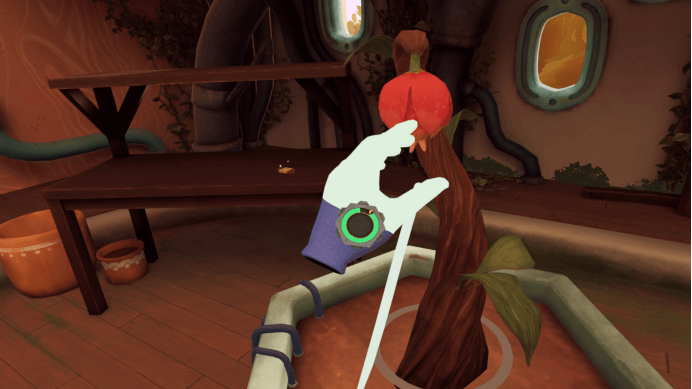
When I first manipulated the little alien wearing a transparent helmet and sneaked into this strange fluorescent sea, what I picked up was not a treasure, but a piece of plastic curled up in the coral with a vague logo. My tool is not a weapon, but a gentle sucking gun, which makes a slight “gurgling” sound and puts the colorful particles wrapped around the seagrass and stuck in the seashell into the purification tank on my back little by little. _Loddlenaut_ wraps a silent tragedy that is happening on our planet with its pastel and dreamy tone, and gives me an almost childlike right to repair.
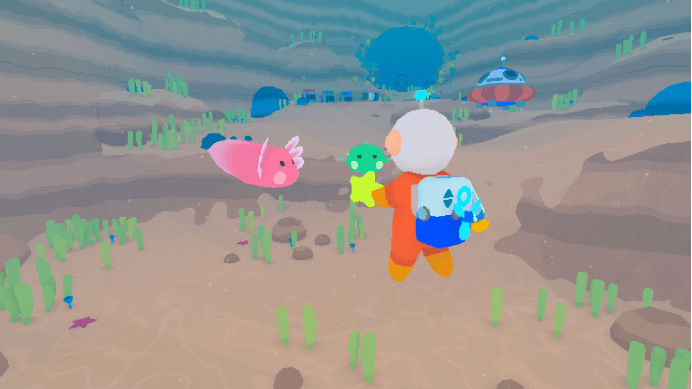
I come from a distant civilization called “Guardian”. The task is to purify the marine planet “GP-26” abandoned by human beings. There are no enemies here, only scars. My exploration went from shallow to deep, from shallow reefs that can still be seen through by sunlight to dark deep-sea hot springs. The form of pollution has also changed: large areas of packaging bags and bottle caps are floating in the near sea, and more hidden “plastic organisms” that have begun to be engulfed and combined by unknown creatures are deposited in the deep sea. Cleaning itself is a strange healing. I gently peeled off the nylon net attached to the coral with a sucking gun and watched it return to its original soft swing; I sucked out the particles in the fluorescent jellyfish that accidentally ate plastic and rolled in pain, and it regained its balance and sprinkled a grateful light. In every cleaned area, the sea water will immediately become clear and the color will revive, as if the planet itself is taking a long breath of relief.
However, the game doesn’t let me stay in the role of a simple cleaner. With the exploration, I found human research stations, residential modules and holographic log fragments on the seabed. These clips piece together a familiar story: humans once came here to mine rare minerals and set up outposts to bring “convenience”. Then, after they left, the garbage and industrial residues left behind began to silently erode the entire ecosystem. I haven’t met any human beings. All I’m facing is the consequences of their behavior and a group of local creatures that have become deformed and painful in adapting to this pollution. My task has quietly changed from “purification" to "atonement” — not for my own civilization, but to remedy the faults of a civilization I have never met.
The core growth system is called “ecological harmony”. The plastic I cleaned is not simply discarded, but transformed into a resource in the base for cultivating special “purified plant” seeds. I planted these seeds on the most damaged seabed. They will grow slowly, actively absorb residual micropollutants, and attract native organisms to return. When I turned a trench that used to be a plastic garbage dump into a nursery of glowing sea anemones and curious fish, the satisfaction was far better than defeating any powerful BOSS. I’m not just removing the damage, I’m giving rise to a new and more resistant network of life.
There is no fierce conflict in the game, and its rhythm is as gentle as the tide. I roamed under the sea, played with the creatures who were traumatized and got close to me again because of my help, and listened to the speechless past of the planet through the ocean currents and light and shadow. When I finally purified the core area and triggered the planet’s global purification mechanism, there was no explosion or loud noise. The ocean of the whole planet shines with a gentle golden light from the depths. All the residual pollution is decomposed, and the sea water becomes as transparent as a gem. A group of the largest original creatures I have ever helped surrounded me, making a long, resonant sound. It was not a celebration of victory, but a solemn thank you.
Quit _Loddlenaut_ and return to reality. I looked at the world outside the window, and my eyes were already different. This game does not give me the power to fight against great evil. It gives me a delicate perspective and a quiet sense of responsibility. It makes me believe that even in the face of huge historical scars, repair is always possible — it begins with a small, focused and respectful cleanup. After all, the seeds of hope sometimes need to be planted in the deepest part of the wound in order to grow the most tenacious and healing roots of the future.