Editorial
The Gecko Gods' Temple Climbing Record as a Gecko — Remeasuring the Grandeur of Lost Civilizations from the Scale of a Tiny Creature
When I first attached the engraving on the wall of the temple, which was not much wider than a hair, with my small toes, the whole world turned over…
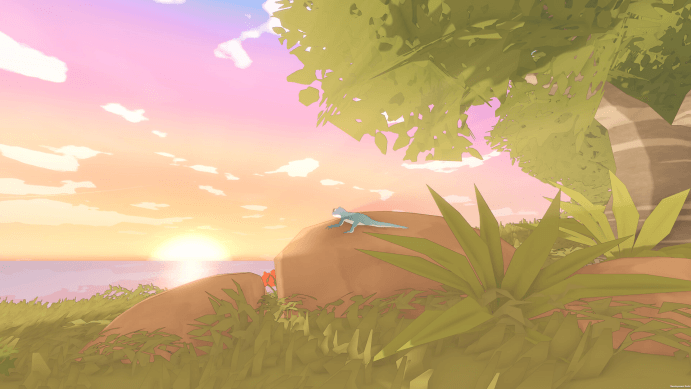
Scale swap on temple stone
When I first attached the engraving on the wall of the temple, which was not much wider than a hair, with my small toes, the whole world turned over ninety degrees in front of my eyes.
I no longer looked up at this relic.
I became a grain of dust on its skin, slowly crawling along its eternal texture.
The front is no longer a porch or a hall, but a brick crevice that is insignificant to human beings, but to me, it is like the Great Rift Valley of East Africa.
The Gecko Gods compressed me into the scale of a gecko with a precision that is almost physical simulation.
Thus, an abandoned temple is no longer a still life to be viewed, but a vast universe that is rich in touch, dangerous, and waiting to be re-measured.
My journey began with an ancient courtyard engulfed by the jungle.
Climbing as reading texture
The task sounds grand: to solve the secrets of the temple and awaken the sleeping gods.
But when it is implemented, it is full of humble pragmatism.
What I need to do is to find enough footholds on the vertical murals and climb to a high place to push a loose brick; to use the dexterous tail to hook a vine hanging from the cliff in the distance and swing through the gap under my feet, which is only one step away in the eyes of human beings but a bottomless abyss for me.
The miniature perspective completely reconstructs the solemnity of the space.
A collapsed stone pillar, which is just a stumbling block for human beings, is a mountain peak for me that needs to carefully plan the climbing route; a decorative relief line engraved on the wall has become my life-saving climbing fulcrum across the whole wall.
Magnificent, at this moment, is experienced as a tangible and detailed physical reality, the game is how it transforms “exploration” itself into a puzzle based on touch and gravity.
I’m not thinking about abstract puzzles, but “reading” buildings with my body.
The back side of monuments
The friction of different materials on the wall , smooth marble, rough sandstone, slippery moss , requires me to adsorb and move with different forces and rhythms.
A wind blowing from the depths of the temple is no longer a background effect, but a force that needs to be fought with all its strength to avoid being blown down.
When I climbed the face of a huge statue and crossed the huge eyelids carved by the boulder with my fingertips, what I felt was not the beauty of art, but a dizzying shiver that directly confronted the absolute volume.
Divinity, in this intimate and suffocating contact, is reduced to pure and oppressive scales and weights.
As I climbed deeper, I began to discover the unknown “back” of this civilization.
I climbed over the ceiling of the magnificent sacrificial hall and saw the unpolished and rough construction traces above.
I walked through the narrow dark waterway for drainage only and found the scribbled symbols casually engraved by craftsmen on the back of the mural.
Triggering the temple machine
I drilled through the ear hole of the statue, and in the cavity inside its head, I saw the wooden frame of the supporting structure , these “inside” and “back” hidden by the bright surface from the human perspective are the most natural way for geckos.
What I gradually put together is not a glorious official history, but a “material history” about construction, maintenance, and time erosion.
The sacred narrative of civilization reveals its essence as a huge, complex and full of artificial traces of civil engineering under the crawling trajectory of the gecko.
At the end of the game, when I finally arrived at the secret room at the core of the temple and used the weight of my tiny body to trigger the grand organ for the “god”, there was no dazzling light or the appearance of the gods.
The whole temple began to emit a low roar, and all the portals, passages and hidden organs slowly opened, closed and reorganized in turn.
I lay quietly on a high place and watched the boulder building operate itself like a huge precision instrument.
I suddenly understood that what I awakened was not a specific god, but the complete function of the building itself as a “divine machine”.
Fingertips still buzzing
And I, this insignificant gecko, became the last living key to be put in the right position.
After exiting the game, I moved my stiff fingertips, as if there was still a grainy feeling of virtual sandstone on it.
The Gecko Gods did not give me the glory of conquering the ruins.
It gave me a complete scale replacement.
It made me experience that real awe sometimes does not come from looking up at the magnificence, but from the moment when you become small enough to climb on its surface and feel every bump, crack and temperature of it with your whole body.
Perhaps, the most profound way to understand a civilization is not to read the words it leaves, but to crawl through its silent boulders like a gecko and find its true breath and weight in the cracks that were never intended to be seen.
Keep exploring
Explore on Vivid-seed Games
Ready to play? Browse free HTML5 games or read more guides.
Articles on Vivid-seed Games are written by our editorial team for entertainment and general education. They are independent editorial content and are not required to link to a specific game on this site. Illustrations are sourced from licensed stock libraries (e.g. Unsplash, Pexels) as credited in captions.
More to read

The big challenge of skiing feels like a winter postcard with teeth

Golf Garden: A Calm Browser Session Worth Revisiting on Vivid-seed Games

food lover Big battle turns kitchen chaos into a short browser break